
The complete guide
Choosing a Solar Up Down Wall Light for Your Outdoor Space
A dark outdoor wall can make an entrance feel unfinished, even when the rest of the space is tidy. Adding a light may help, but running a power cable is not always a simple job. Solar wall lighting offers another option when the wall receives enough direct sunlight.
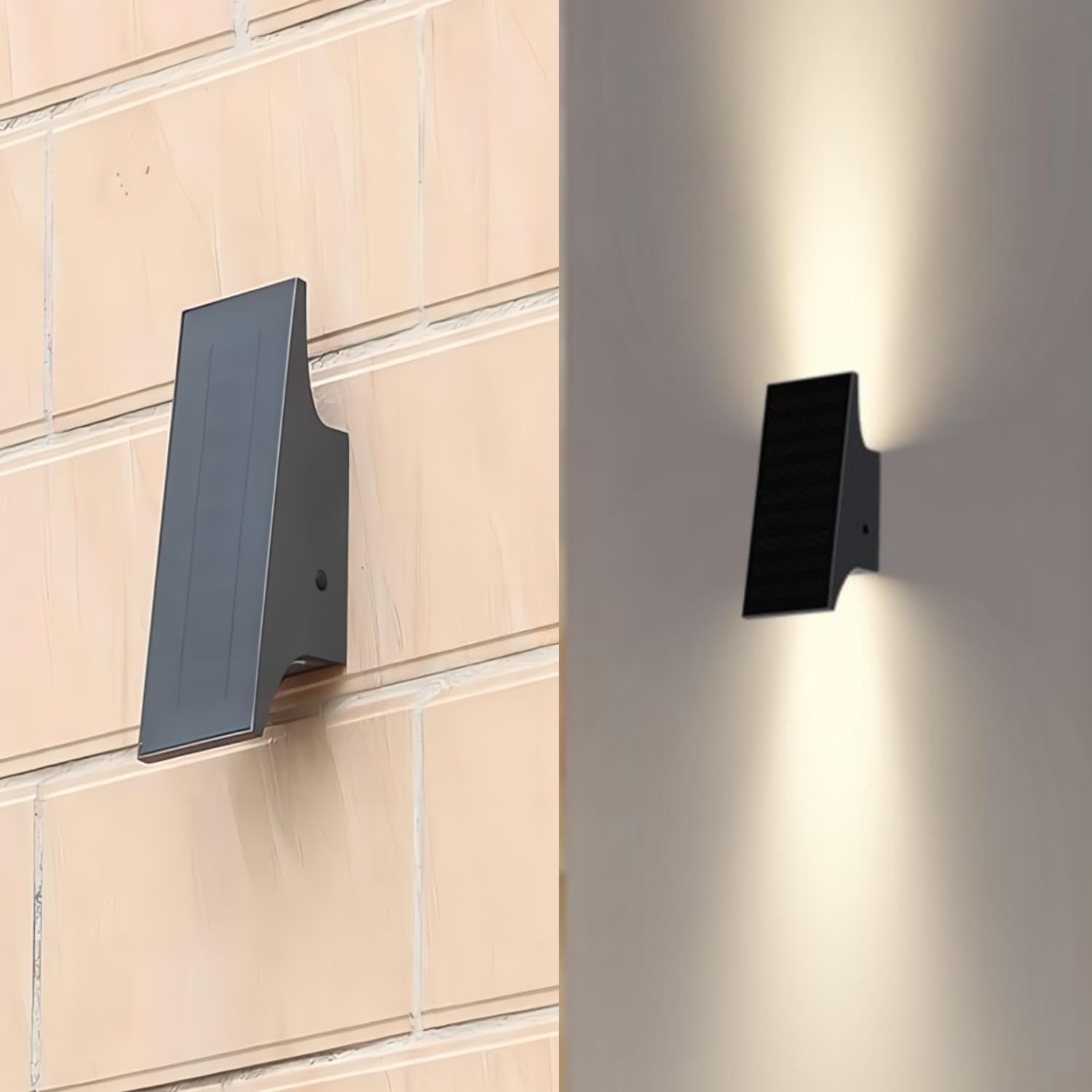
The SOTTLOT solar up down wall light combines a wall-mounted fitting with warm white LEDs and adjustable brightness. It is designed to cast light above and below the unit, rather than point a single beam straight out. Before choosing it, think about both sides of the job: where you want light at night and where the panel can charge during the day.
What an up and down light does
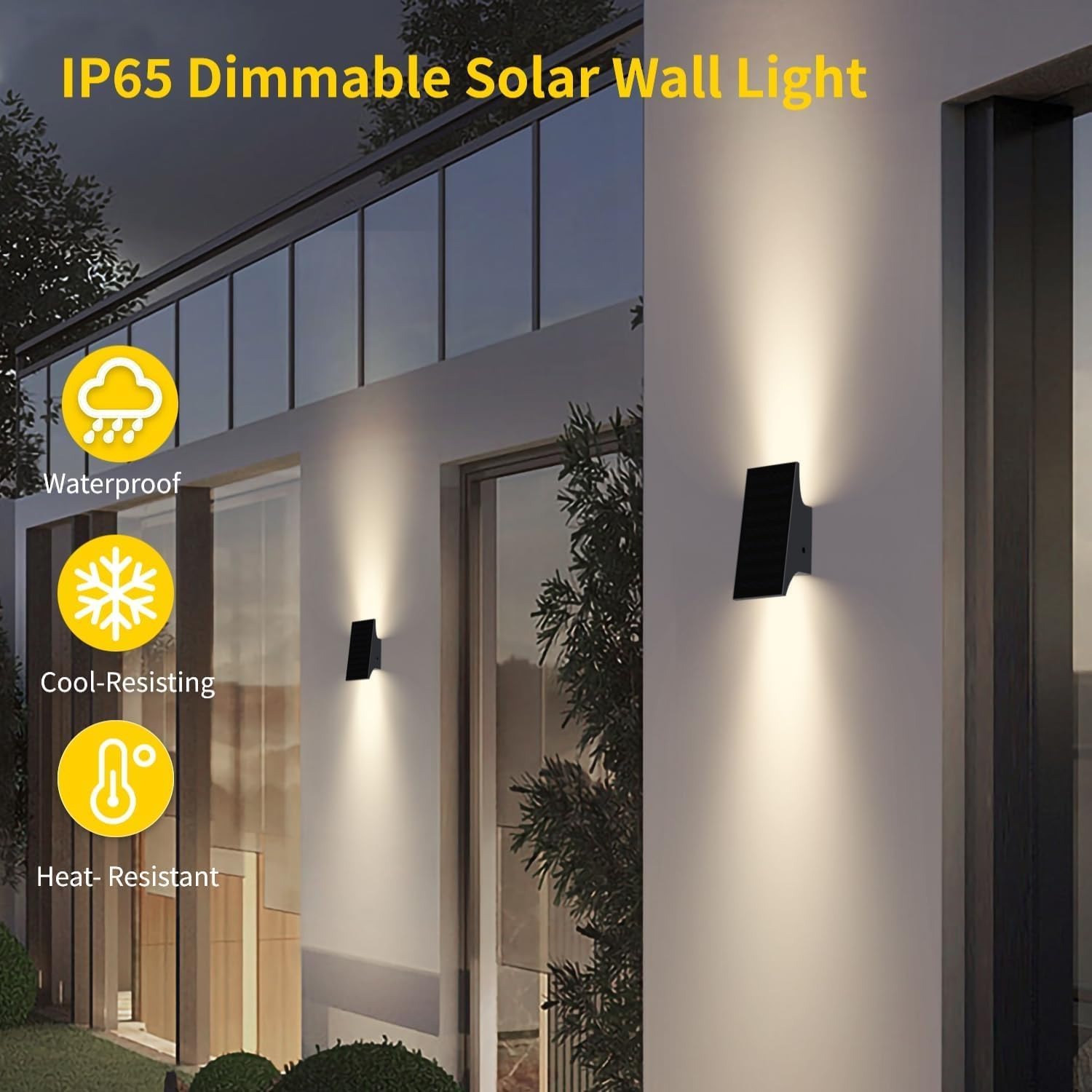
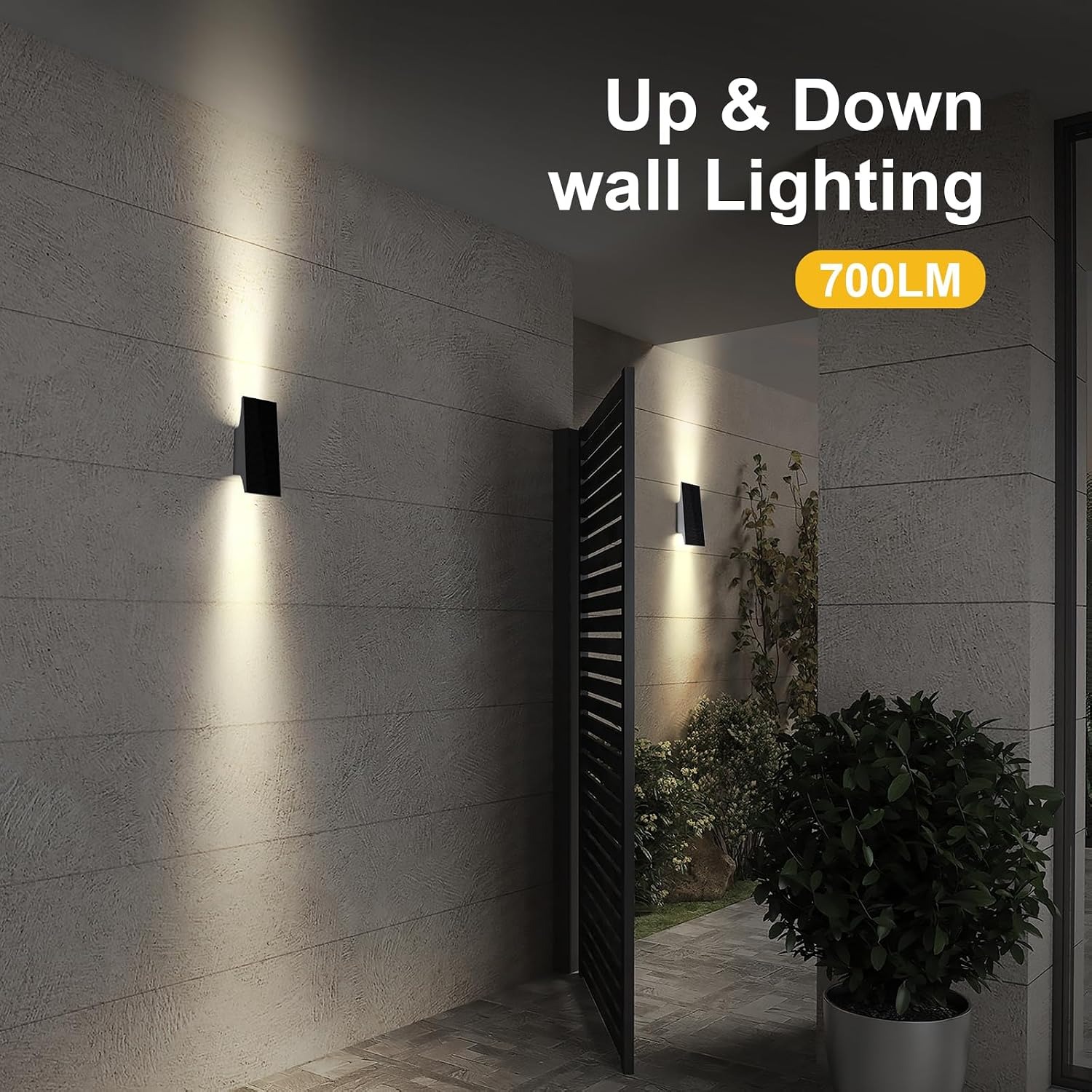
An up and down outdoor light sends light in two directions along the mounting surface. That pattern can add definition to an entrance wall, a fence panel or the side of a garage. It is a different effect from a floodlight aimed across a yard.
This model has two LED light sources and a listed maximum output of 700 lumens. The supplier does not give beam angles or a measured coverage area, so there is no firm basis for promising how much wall or ground it will light.
Think of it first as a solar wall washer light for local illumination and visual interest. If you need reliable lighting for steps, hazards or detailed work, assess those needs separately. A decorative wall fitting should not be your only answer to a safety-critical lighting problem.
Start with sunlight, not appearance
It is tempting to choose the most attractive spot on the wall and think about charging later. With solar lighting, that order can lead to disappointment. A fitting under a deep porch roof may look right but receive very little useful sunlight.
Walk around the proposed location during the day. Check for shadows from trees, fences, roof edges and nearby buildings. A wall that gets morning sun may be shaded for the rest of the day, while a different position could offer a much clearer charging window.
The supplier recommends direct sunlight and a position facing the sun. This model also has a solar panel described as inclined at 15 degrees. That detail does not remove the need for a sunny location. If the wall stays shaded, consider a different lighting arrangement rather than expecting a higher brightness setting to solve the problem.
Choose a light color you want to live with
This is a 3000K solar wall light, which means its light is warm white. That color often suits places where people sit, arrive home or move between indoor and outdoor spaces. It gives a different feel from the cooler white often used for task lighting.
When comparing fittings, keep color temperature separate from brightness. A warm light can still have a high light output. The 3000K figure describes the light's color, while the lumen figure describes its output.
If you already have lights nearby, check their color before buying. Mixing warm and cool white may be fine, but it can also make a small area look less consistent. A warm white solar sconce is an easier match when neighboring lights have a similar tone.
Understand the four brightness settings
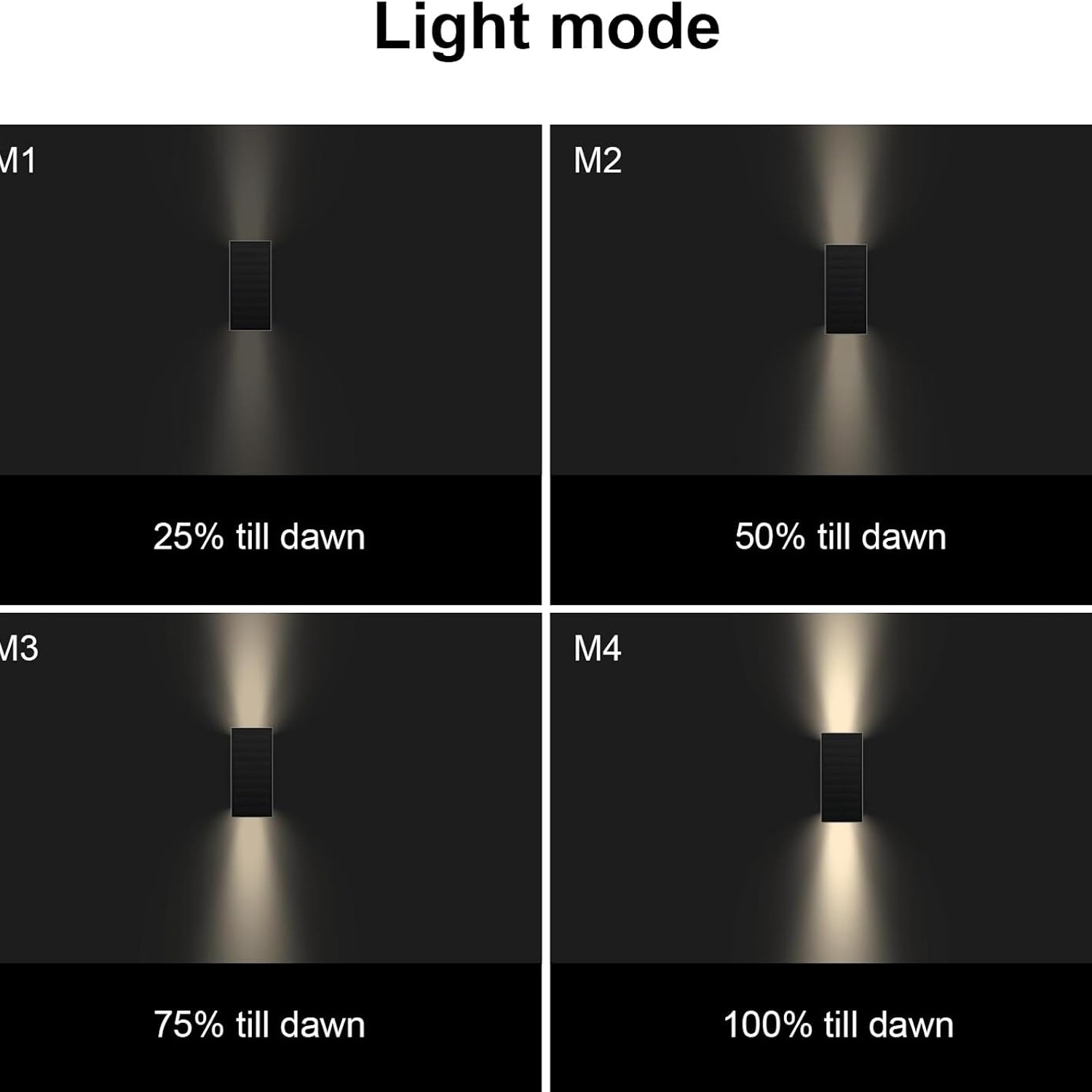
The available settings are 25%, 50%, 75% and 100%. They let you adjust the light to suit the site instead of using full output every night. A small entrance may not need the same setting as a more open patio wall.
Start with the lowest level that meets your needs. Lower brightness uses less of the available energy and can help the light run longer. Full brightness may be useful when you want stronger illumination, but it asks more of the stored charge.
There is no verified runtime table in this record. Battery capacity and charging duration are also not specified. For that reason, treat dusk to dawn operation as dependent on conditions, not as a promise of identical performance through every season.
Decide where it will be most useful
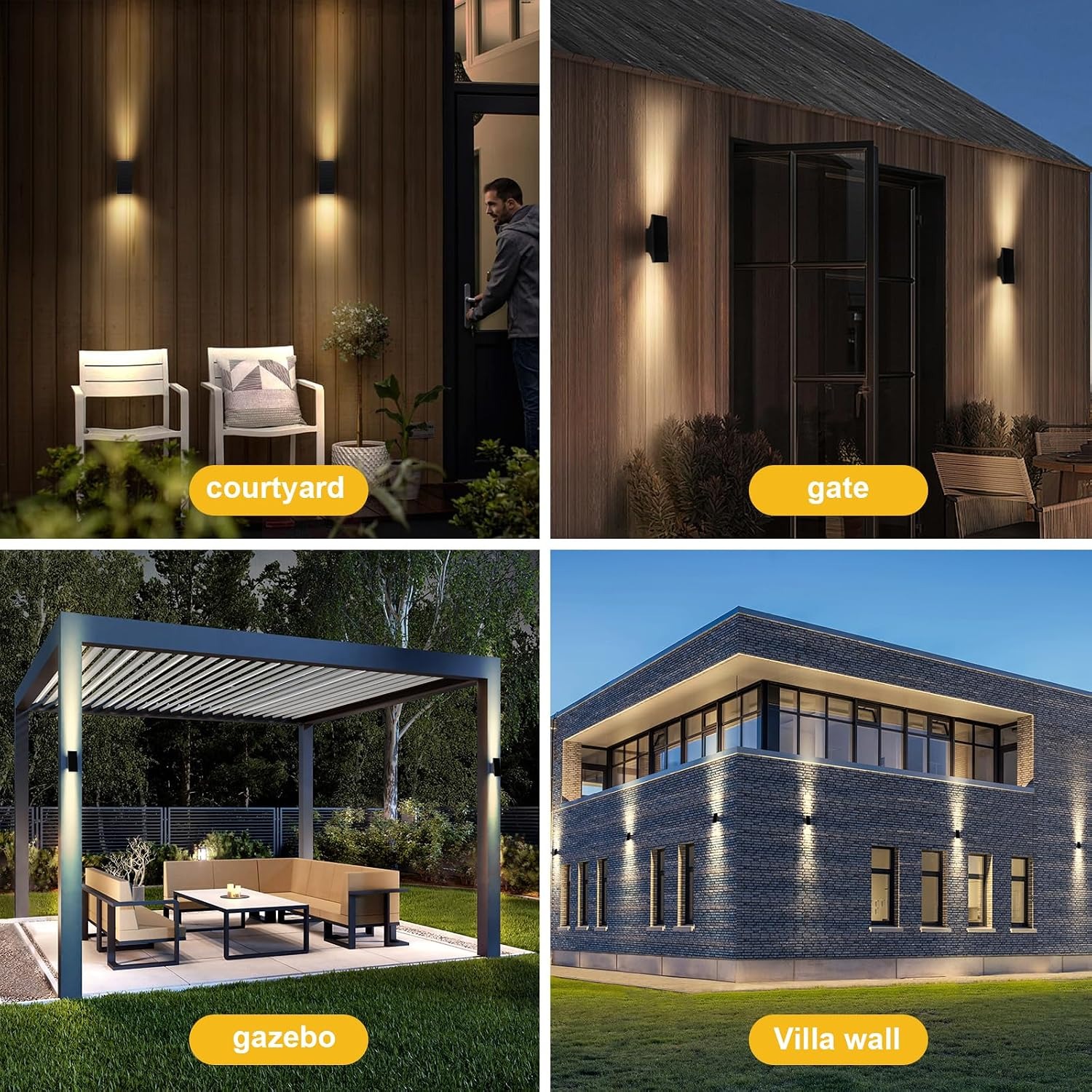
A solar porch light can make sense near an entrance if the panel is not hidden by the porch roof. Think about the view from the path as well as from the doorway. The upward and downward light pattern needs some clear wall space to show.
For a solar fence light, look at the strength and condition of the mounting surface. Thin or loose boards may need attention before installation. Also consider whether planting will grow tall enough to shade the panel later.
Garage and patio walls are other listed locations. A solar garage wall light can add local light beside a door, while a solar deck light may help define a nearby wall. Neither use establishes a guaranteed coverage area, so avoid planning a large space around an assumed beam distance.
Measure before ordering
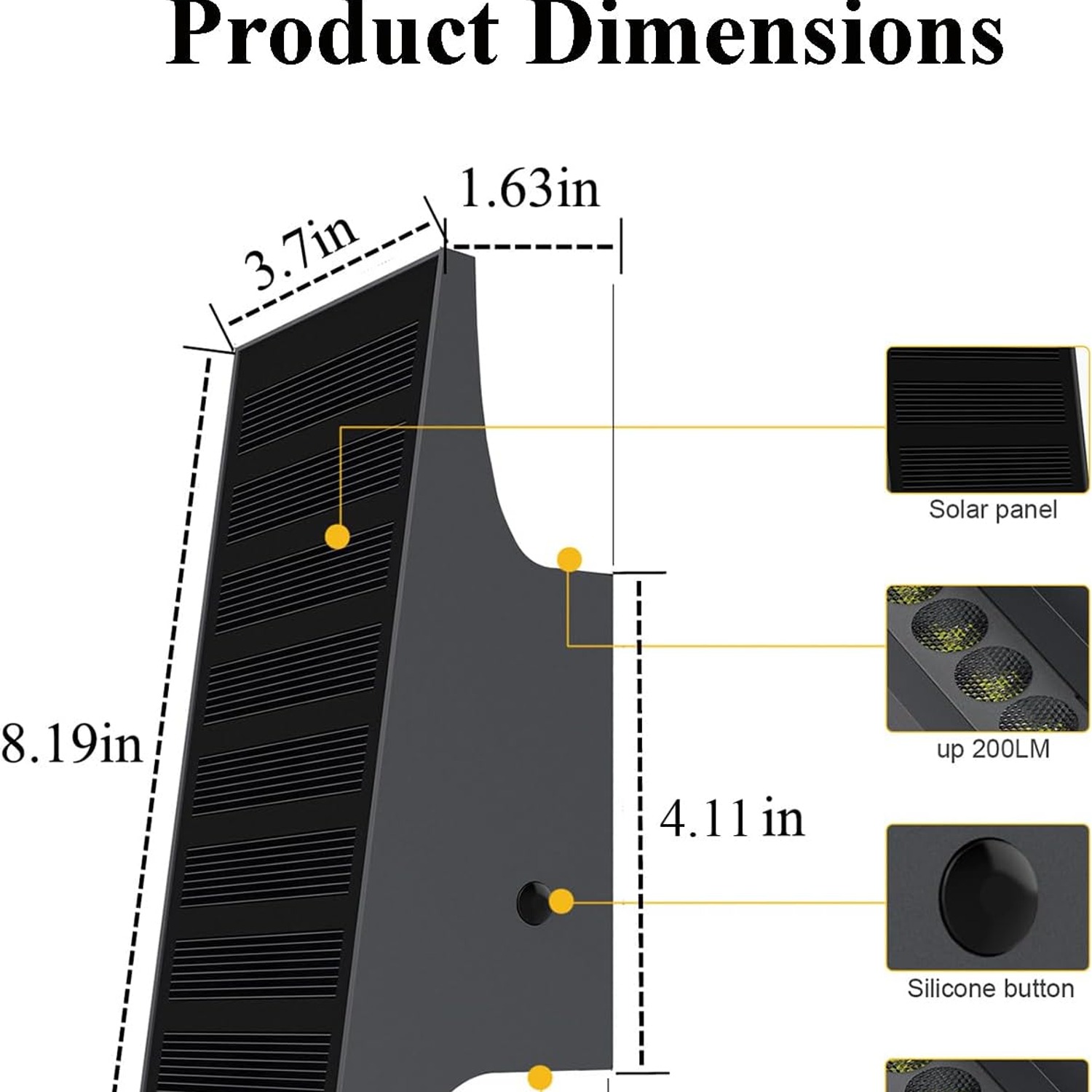
The listed dimensions are 20.8 × 9.3 × 7.1 cm, and the light weighs 449 g. Mark out that space on the wall before you buy. A paper outline is a useful way to judge whether the fitting will look too small or sit too close to trim.
Leave room around doors, gates and any moving parts. Check that the fitting will not be knocked when a door swings open or when furniture is moved. For a solar gate light, a fixed wall or post may offer a more suitable position than a moving section.
This listing contains one light. If you want a pair flanking an entrance, plan for two units and check the sunlight at both positions. Matching placement does not always mean matching charging conditions.
Know what installation involves
The supplier describes installation without external wires or adapters and says screws are included. That makes the electrical side simpler, but the mounting still deserves care. Supplied fixings are not automatically right for every wall.
Choose screws and anchors suited to the surface, and follow the supplied instructions. Before drilling, check for concealed services. If you are uncertain about the wall or the fixing method, get help from someone qualified for the task.
The listing says no assembly is required. You will still need to mount the light and activate it. The supplier references differ slightly on the required button-hold time, so use the instructions supplied with the unit rather than relying on a precise timing claim here.
Read weather claims with care
The supplier states an IP65 rating and describes the fitting as suitable for outdoor conditions. The detailed specifications list an ABS housing and a powder-coated finish. These are useful facts when comparing outdoor LED wall sconce options.
Outdoor suitability does not mean the light should be submerged, pressure washed or placed where water collects around it. Choose a sound mounting position and follow any location limits in the manual.
It is also worth separating housing protection from solar performance. A light may be designed for rain exposure yet receive little charge during a run of cloudy days. Weather protection and available lighting time are different questions.
Keep the panel clear
Solar lights need a little routine attention. Dust, leaves and other debris can cover the panel and reduce the sunlight reaching it. Check the panel when you are already cleaning or tending the surrounding area.
Use a soft, damp cloth on the panel and housing. Avoid harsh cleaners, abrasive pads and pressure washing. Check the mount from time to time, especially if the fence or wall moves or shows wear.
If lighting time drops, start with simple checks. Look for new shade, dirt on the panel or a brightness setting that is higher than you need. Battery replacement instructions are not provided in this record, so do not open the housing without checking the manual first.
Compare the details that matter to you
The best solar wall light for a particular spot is one that suits the sunlight, the mounting surface and the job you need it to do. Appearance matters, but it cannot make up for a panel that spends the day in shade.
This SOTTLOT solar wall light offers warm white output, four brightness levels and a two-direction lighting pattern. Those are clear reasons to consider it for local decorative lighting. It does not come with verified runtime figures, battery capacity or a measured coverage area in this record.
Before ordering, also check delivery information, return conditions and warranty terms on the storefront. Those details are not fully supplied here. If overnight reliability is central to your plans, ask for more information or compare a lighting system with documented performance.
The short version
Choose this rectangular solar wall light when you want warm white light above and below a fitting on a sunny outdoor wall. Measure the space, check the panel's exposure and start with a modest brightness setting.
It is suited to a range of listed outdoor locations, including patios, fences and garage areas. Give it a suitable mounting point and realistic expectations, and you can judge whether its lighting pattern meets your needs without relying on unsupported runtime promises.