
The complete guide
Choosing a Solar Flood Light with Remote for Your Outdoor Space
Light where a power point is not handy
A dark doorway or garage approach can make ordinary evening tasks awkward. You might only need enough light to find your keys, bring in garden tools or see the path across a courtyard. Running a new mains supply is not always the first option you want to explore.
A solar flood light with remote offers another approach. A panel collects energy during the day, and a battery stores it for use after dark. The remote lets you change settings without reaching the mounted light.
The BOSITE BS-SFLM combines this setup with cool white LEDs, an adjustable bracket and timed lighting options. The important buying question is not just how bright the listing sounds. It is whether your site gives the panel enough sun and lets you aim the light where it will help.
How the separate panel helps
The sunniest spot and the most useful lighting spot are often different. A garage wall may be ideal for the fixture but sit under an eave. A nearby open section of wall may receive much better daylight.
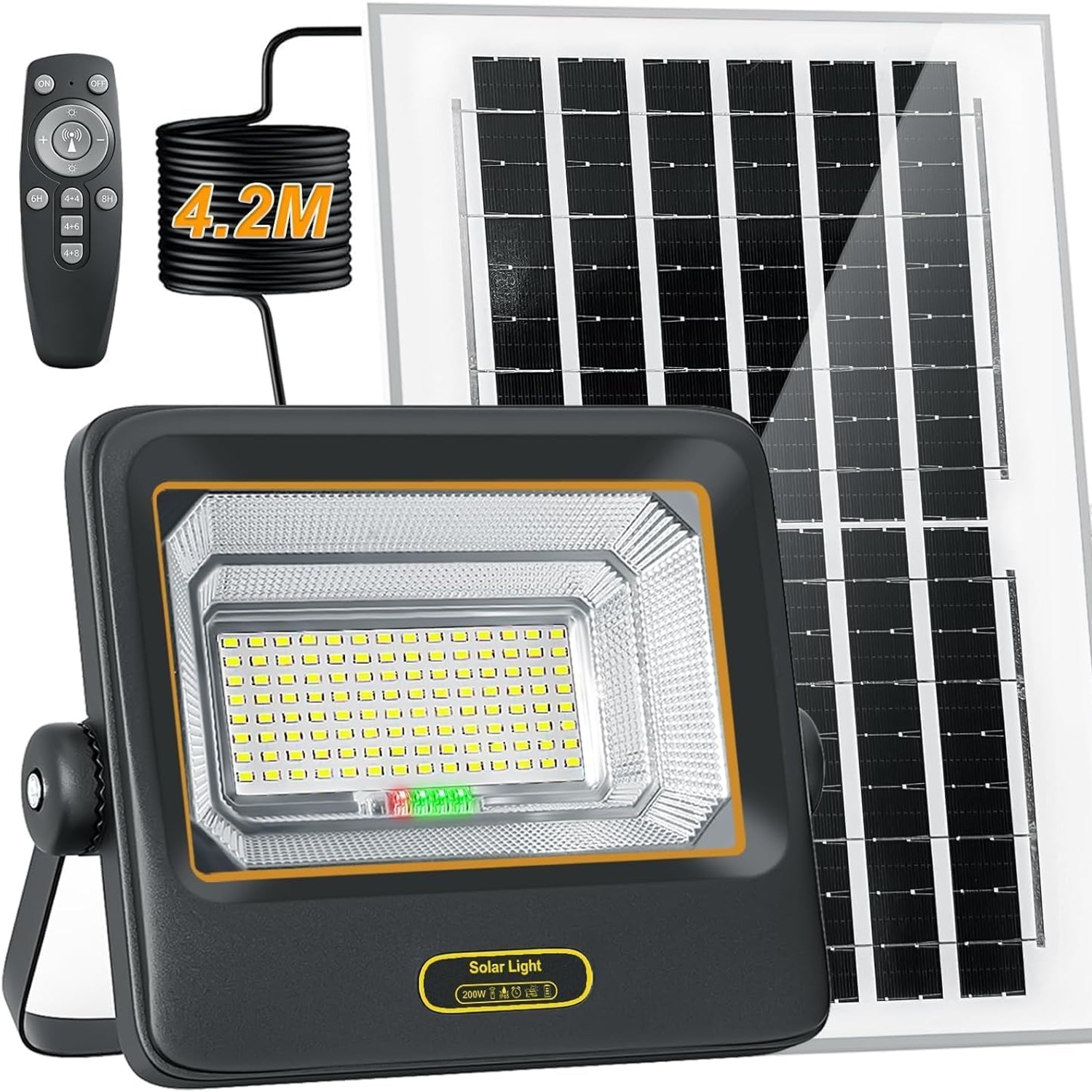
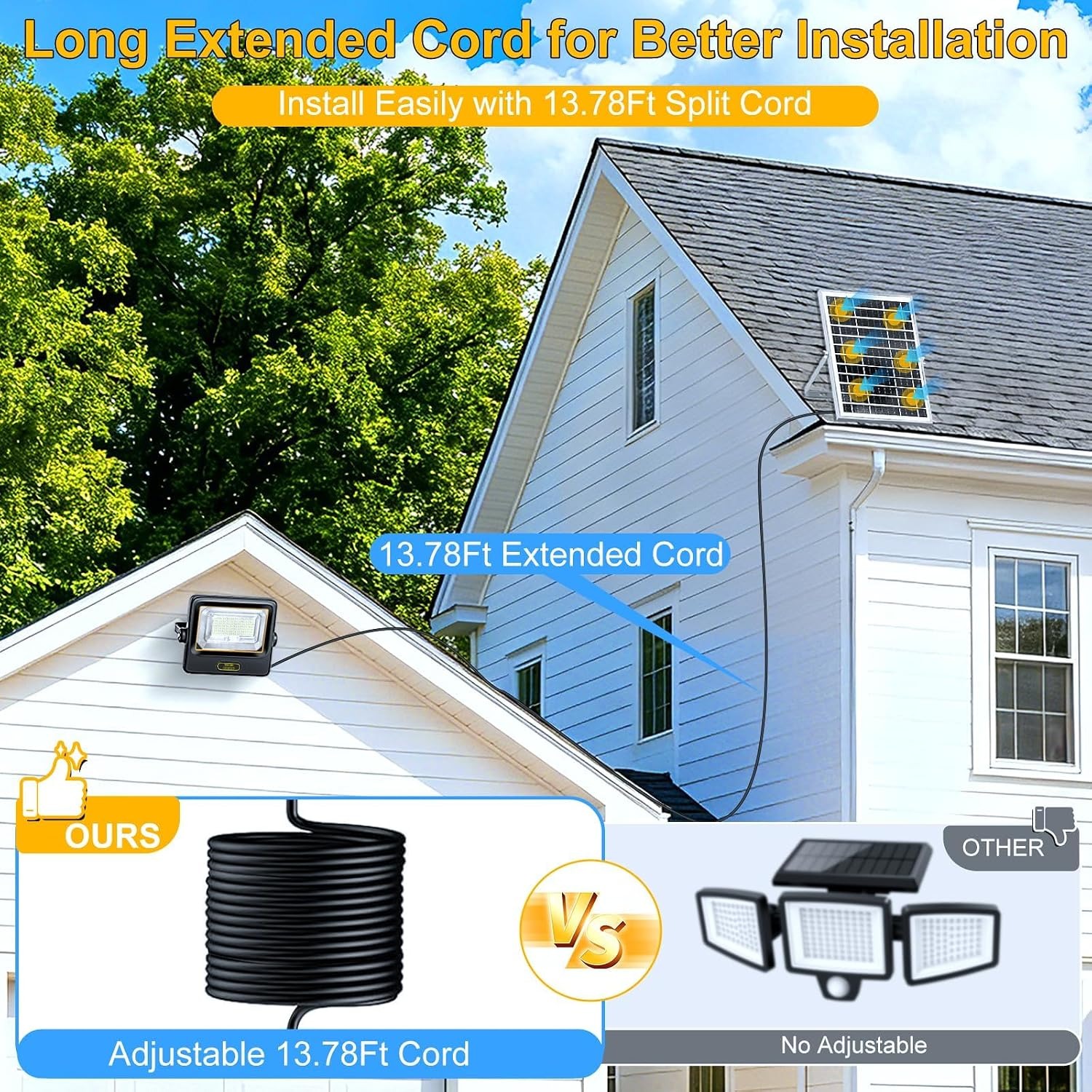
This solar light with separate panel has a listed 4.2 m connecting cable. That gives you some choice over where each part goes, though it does not mean they can always sit 4.2 m apart in a straight line. Corners, cable clips and the route around a doorway all use length.
Measure the planned cable route before drilling. Keep it away from places where doors, tools or garden work could damage it. Do not assume an extension cable is supported, since compatibility details are not provided.
The panel is listed as monocrystalline silicon, with a 6 V, 8 W rating and dimensions of 350 × 235 mm. Check that you have room for it as well as for the light.
Read the brightness figures with care
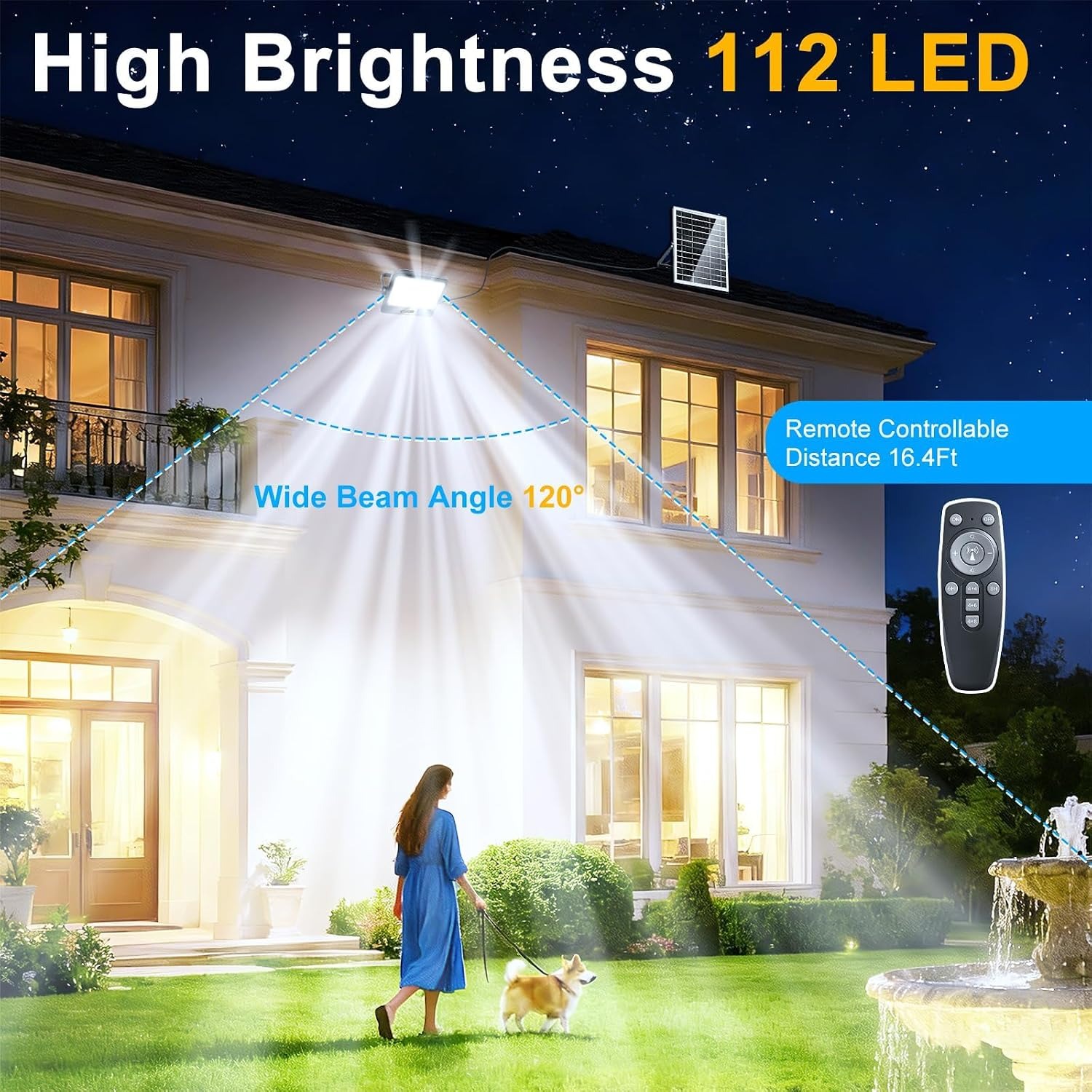
The listing describes 112 LEDs, a maximum brightness of 20,000 lumens and a 200 W product rating. These figures identify how the supplier presents the product. They are not independent test results.
In particular, the 200 W label does not establish the light's measured electrical consumption or prove that it matches a particular mains-powered floodlight. The panel's listed 8 W rating is a separate specification. Avoid treating those numbers as interchangeable.
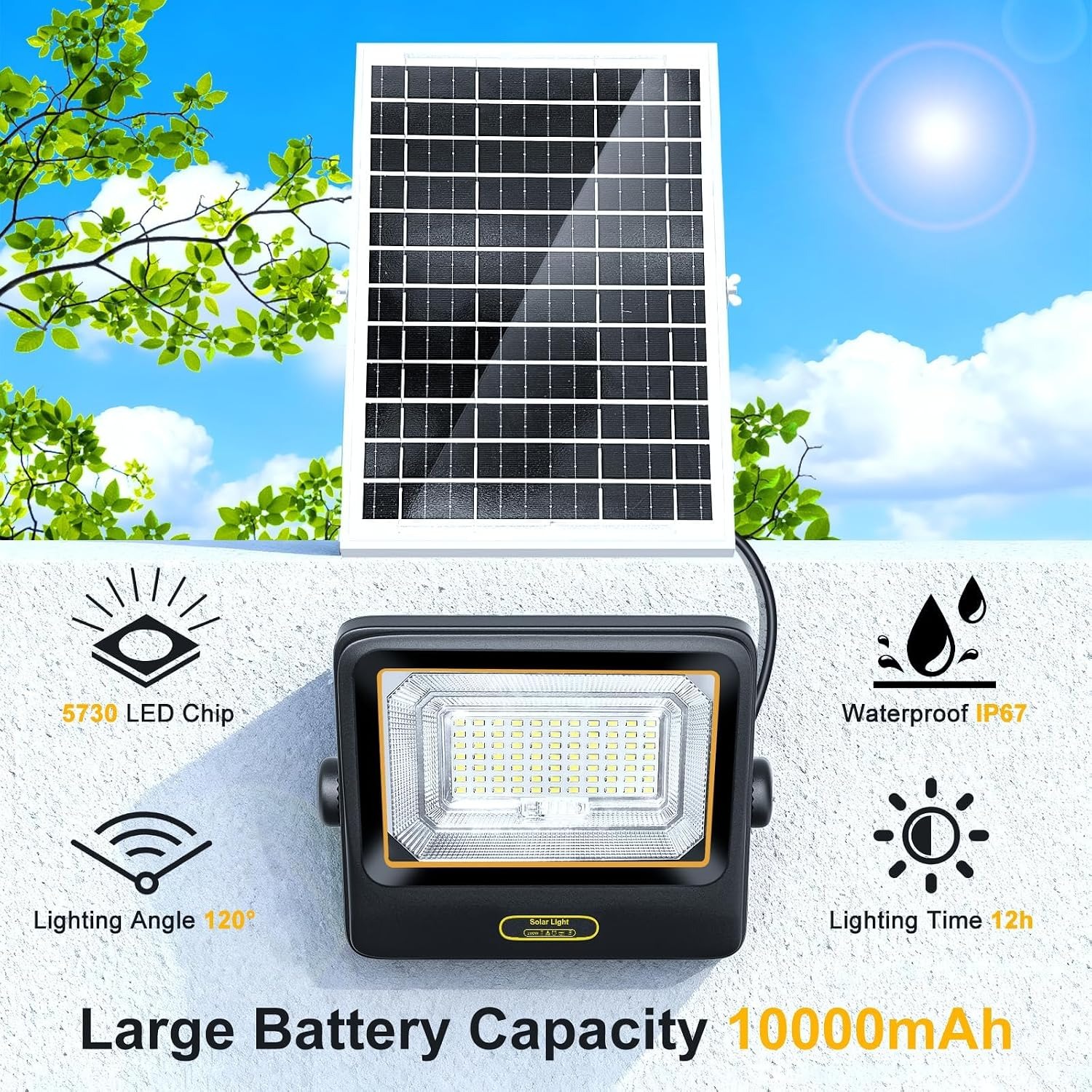
For a useful comparison, look at beam direction, mounting position and the area you want to see. The listed beam angle is 120°, which is intended to spread light rather than create a narrow spotlight.
The supplier also lists coverage of 1,615 square feet. Do not use that figure alone to plan lighting for a large site. Mounting height, obstacles and the level of light you need can change the result.
Decide whether cool white suits the space
This outdoor LED floodlight has a listed color temperature of 6500 K. That is cool white, rather than the warmer tone often chosen for relaxed patio seating.
Cool white may suit practical areas where you want a crisp view of the ground, a doorway or stored equipment. If your main goal is soft evening atmosphere, think carefully about the color before buying.
Placement matters just as much as tone. A bright fixture aimed across a seating area can be uncomfortable even when it lights the ground well. Aim it towards the task area and away from normal eye level where possible.
The listing mentions an anti-glare feature, but that does not remove the need for thoughtful positioning. Check the view from nearby windows and the neighboring property too.
Match the controls to your evening routine
Remote control is useful when a light sits above easy reach. The supplier lists a range of 16.4 ft, though the record does not state the conditions used for that figure.
The lighting controls include maximum and medium brightness levels, plus stepless dimming. This gives you a way to reduce output when full brightness is unnecessary. A small courtyard may need a different setting from an open garage approach.
Five lighting modes are listed. These include descriptions of six and eight hours at maximum brightness, along with timed shutoff options after eight, ten or twelve hours. Confirm the exact button functions in the supplied instructions rather than relying on the brief mode descriptions alone.
Choose a setting around your actual routine. If you mainly need light while arriving home, a timed option may make more sense than trying to keep the area brightly lit throughout the night.
Understand dusk-to-dawn operation
A dusk to dawn solar flood light is designed to respond to ambient light, reducing the need to switch it manually each evening. This model lists automatic dusk-to-dawn operation and a light sensor.
That feature should not be confused with motion sensing. The record does not specify a motion detector, so do not buy it expecting the light to react when someone approaches.
Automatic operation also does not guarantee a full night of light in every season. The battery must first receive enough energy from the panel. Brightness settings and operating time then affect how that stored energy is used.
Think of dusk-to-dawn control as a convenience feature, not a promise of fixed overnight performance regardless of weather.
Allow for changing sunlight
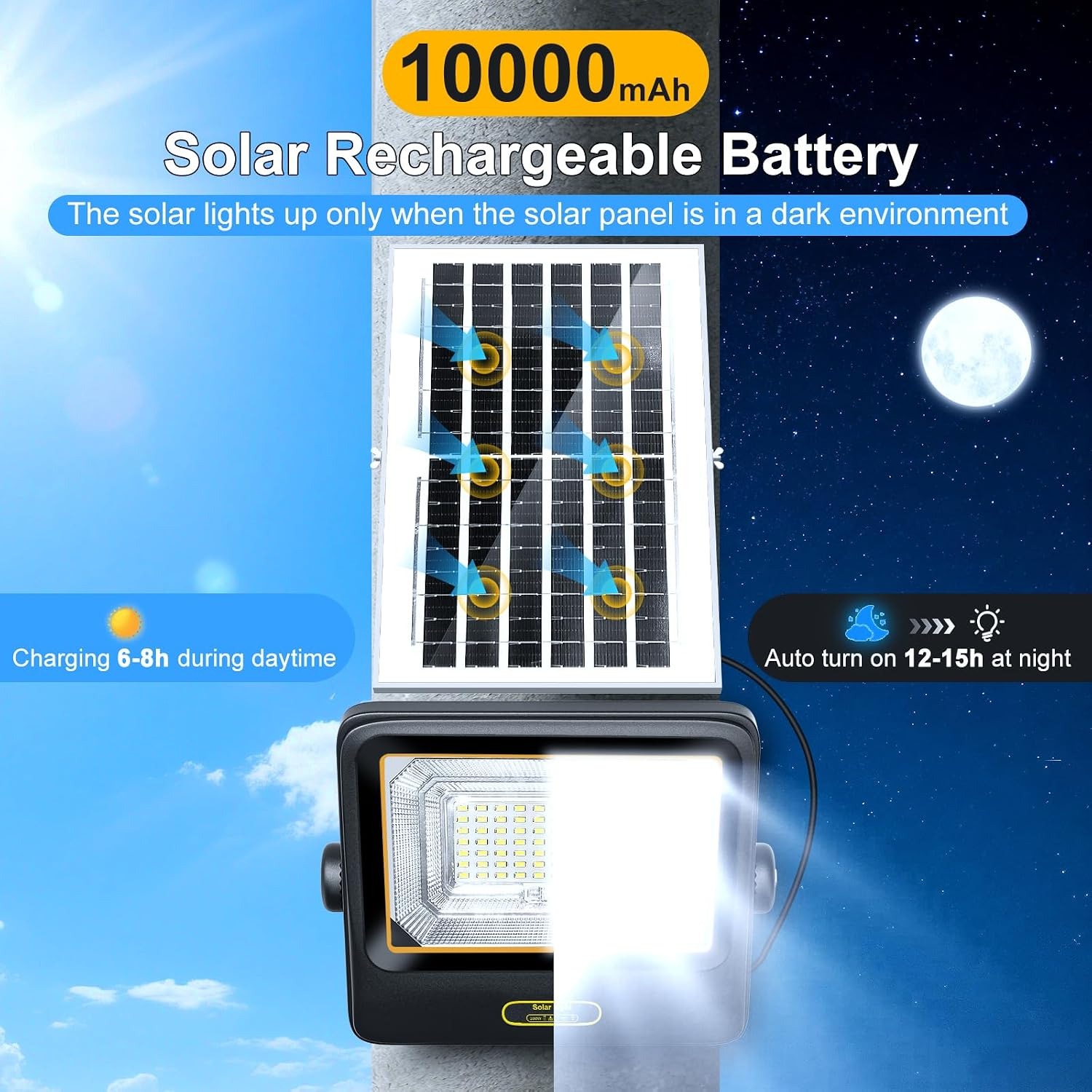
The supplier lists a 10,000 mAh battery, a charging time of five to six hours and a lighting duration of ten to fifteen hours. These are useful reference figures, but they are not guaranteed results for every site.
Shade is worth checking across the day. A panel that looks clear at midday may be shaded by a fence in the morning or a tree later on. Seasonal changes can alter that pattern.
Place the panel where it can receive strong daylight, following the supplied installation guidance. Keep leaves and surface dirt from building up, since a covered panel cannot collect light as intended.
If you need dependable illumination for an essential access route, consider the effect of several dull days. Solar lighting should be chosen with the limits of the location in mind.
Check the mounting space before ordering
The listed item dimensions are 35 × 24 × 8 cm, and the weight is 2 kg. Use those figures to assess the space, while allowing extra room for the bracket and cable connections.
The fixture has a listed 180° adjustable bracket. Ground, ceiling and wall installation are described, but the record does not confirm which mounting fixings are included.
A wall mounted solar floodlight needs a sound surface and fixings suited to that surface. Do not assume one type of screw is right for brick, timber and lightweight cladding alike.
Before making permanent holes, work out the beam direction and cable route. If the mounting point is high or difficult to reach, arrange suitable help rather than working from an unsafe position.
Choose it for a clear purpose
A solar courtyard light can help with evening access or practical tasks. A solar garage light may suit the area outside a garage, provided the roof does not shade the panel. Doorways, passages, gardens and barns are also among the listed uses.
For driveway lighting, pay special attention to where the beam faces. You want to see the approach without shining light into a driver's eyes or towards the road.
An outdoor solar security light can add visibility, but lighting alone is not a complete security system. This record does not specify an alarm, camera or motion detector.
Start with the job you need the light to do. That makes it easier to judge whether one broad-beam fixture is suitable or whether you need a different lighting plan.
Care for the panel, fixture and cable
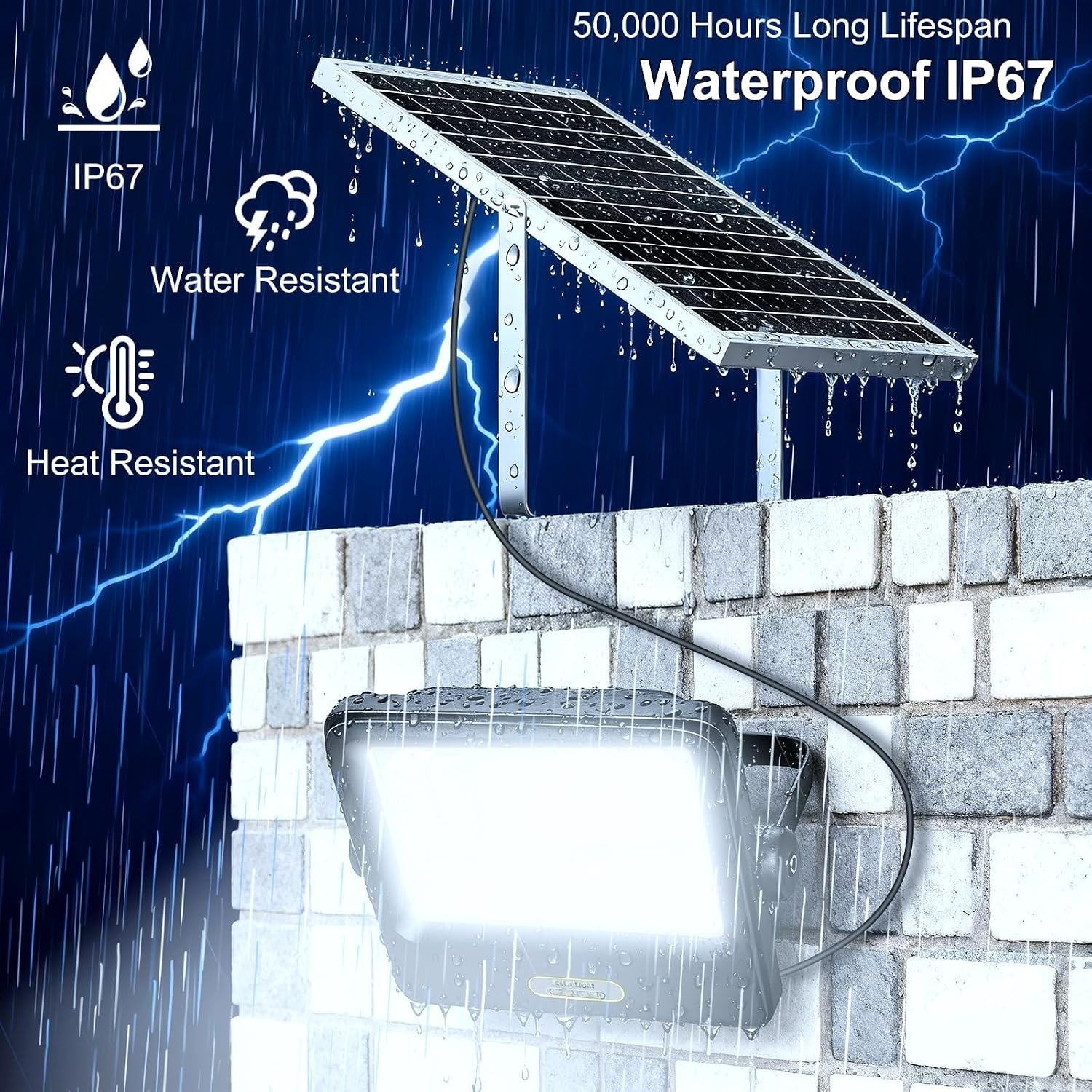
The supplier describes a black ABS housing and lists IP67 water resistance. That rating does not replace correct installation or mean that every connection can be left in standing water.
Follow the supplied instructions for fitting and protecting connections. Check that the cable is supported and does not sit where it can be trapped, pulled or cut.
For routine cleaning, switch the light off and use a soft cloth. Remove dust, leaves and other debris from the panel. Avoid abrasive cleaners and pressure washing.
Look over the bracket and fittings from time to time, especially after rough weather. Battery replacement details are not specified, so seek the correct instructions rather than opening the housing without guidance.
Check the details that are still unknown
Some purchase details need confirmation. The record does not give battery chemistry, a complete hardware list or full warranty terms. It lists a lifetime warranty type, but does not explain its conditions.
Delivery timing is also not specified. Check the current estimate for your address and read the returns policy before installation, particularly if you are buying it as a gift.
These checks are worth doing before the light arrives. They help avoid choosing a product around an assumption that the supplied information does not support.
The short version
Choose this BOSITE model if you want remote-controlled, cool white outdoor lighting with a separate solar panel and adjustable settings. Its listed cable length, bracket adjustment and timers give you several ways to plan the setup.
First, confirm sunlight, mounting strength and the cable route. Treat brightness and runtime figures as supplier claims, and choose the light for the needs of your space rather than the largest number on the listing.